
My sister and I had a great time on the Monroe County (WV) Historic Homes Tour last weekend. After our first stop at St. John's Chapel, we drove south, maybe a mile, to Old Sweet Springs. This grand old place is probably the crown jewel of Monroe County's historic sites. The first hotel on this property was built in 1792, with the main draw being the sweet water that flowed from underground springs. Author Stan Cohen describes this magical water in his book Historic Springs of the Virginias:
"It has been described as the best acidulous water in the United States. It contains quite a lot of carbonic acid (fixed air) which gives it a peculiar briskness. For many years the spring water was credited with remarkable cures of the sub-acute rheumatism and neuralgia. Immersions in the water were also recommended to relieve nephritic complaints. The springs are thermal and are similar to the famous springs of Bristol, England."
Edward Beyer included a rendering of Sweet Springs in his 1857 Album of Virginia, which shows just how much of a resort it had become by the mid-1800s.

Most of the buildings in Beyer's painting are long gone, but enough remain to spur the imagination to conjure up what this sweet spot in the mountains must have been like in its heyday. Old postcards show the main building that still stands today.


This is what that stately old hotel looked like when Connie and I arrived. It's rather like an old suit: still dignified and proper, but a bit worn around the edges.

Sweet Springs functioned as a resort until the early twentieth century. In 1945 it was sold to the state of West Virginia and was first used as a tuberculosis sanatorium. Sometime later it was converted to the Andrew S. Rowan Memorial Home for the Aged, which is how I remember it. I was there many times with church choirs and 4-H groups, giving vocal concerts or caroling the halls during the holidays to cheer the old folks who called it home. When I was in college, I worked there during the summers, assisting the activities director with picnics, shopping trips, and playing many a card game with those who were able to help them pass the time.
My grandmother, who lived alone until she was in her early nineties, always said that if the day ever came when she could no
 |
| My grandmother, Edith Baker Martin, in 1990. |
longer live at home, she wanted to go to "the Old Sweet." And that is exactly what she did, sometime in the late 1980s. Her maiden name was Baker, and her father and grandfather had both worked there as bakers: one making breads and the other making cakes. She most probably spent a good bit of time around the resort while she was growing up, so spending her final years there was, for her, a given. Unfortunately, around 1990, the old folks home was closed by the state and my grandmother spent her final months in another facility. And the resort? Well, it has been sitting there for almost thirty years, abandoned for the most part, and waiting for someone to restore its former glory.
Connie and I climbed the front steps to the massive porch, which spans the entire length of the building. Below the porch is an open breezeway, accessed by huge arches.


When we stepped inside the once-beautiful lobby, our hearts sank. The further we walked into the depths of the building, the more we were saddened by its current state of disrepair. The years of neglect have definitely taken their toll.
 |
| Lobby Fireplace |
 |
| Lobby |
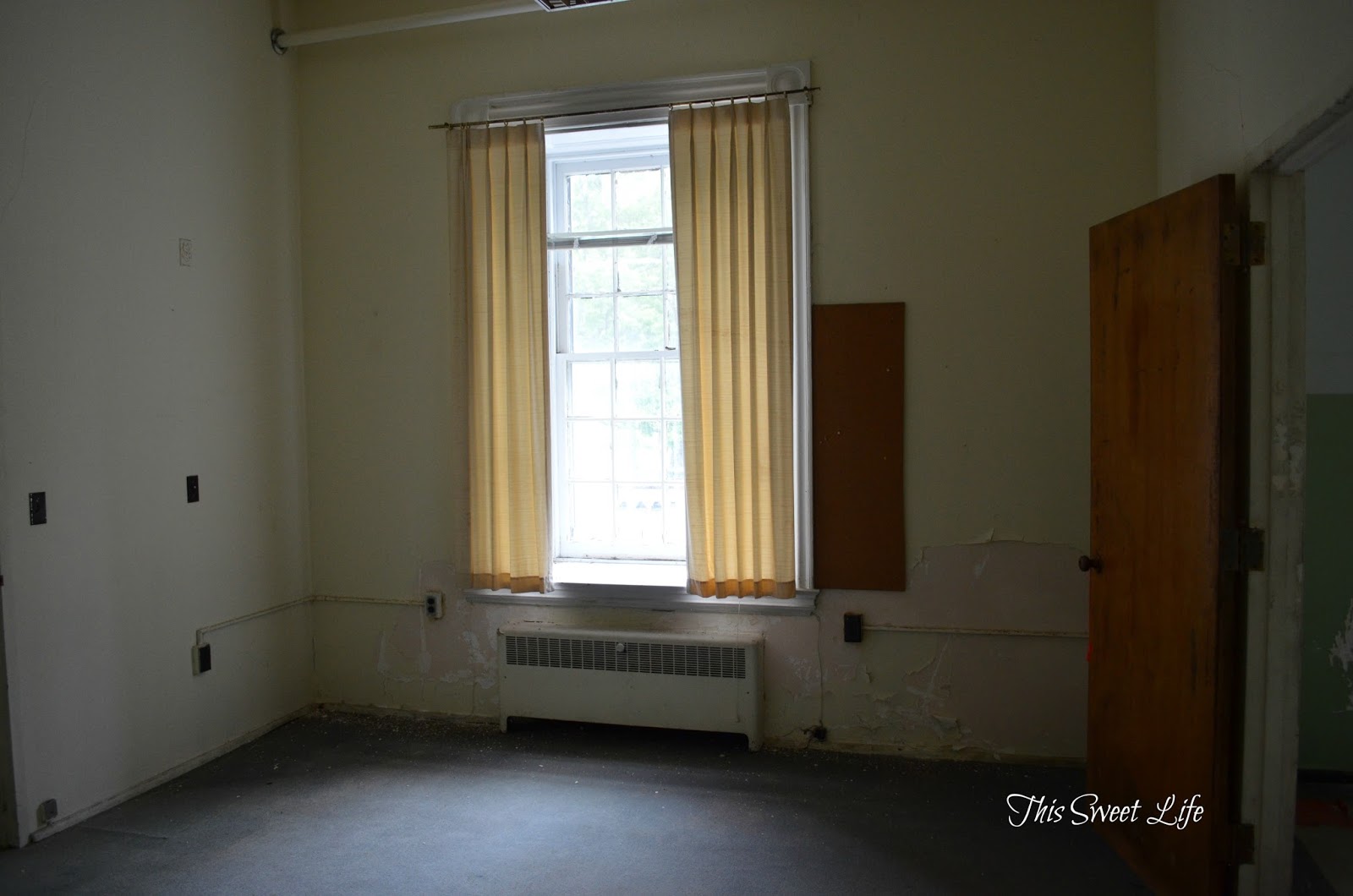 |
| This was an office during the days of Andrew S. Rowan Memorial Home for the Aged. |
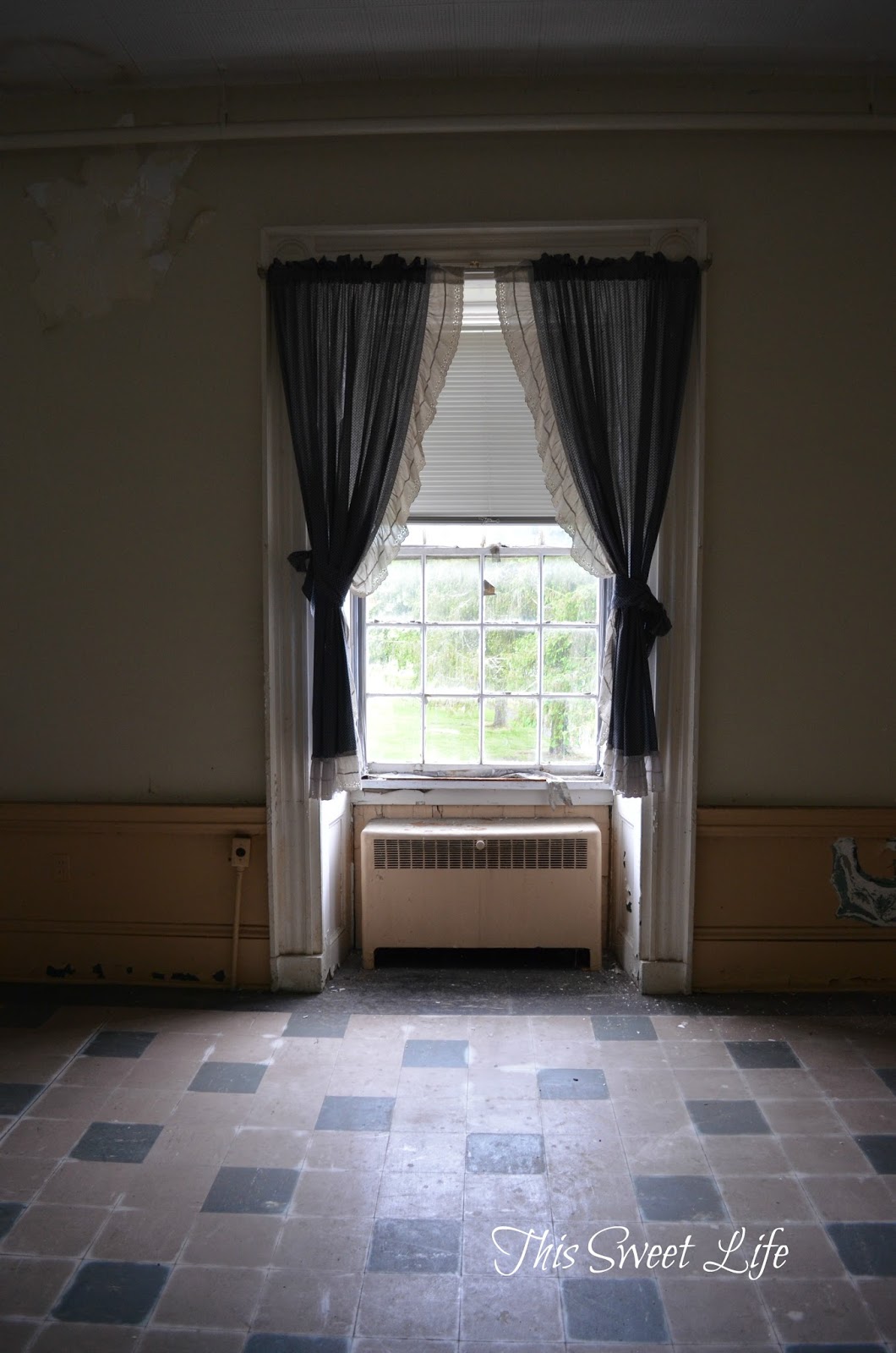 |
| Another office. |
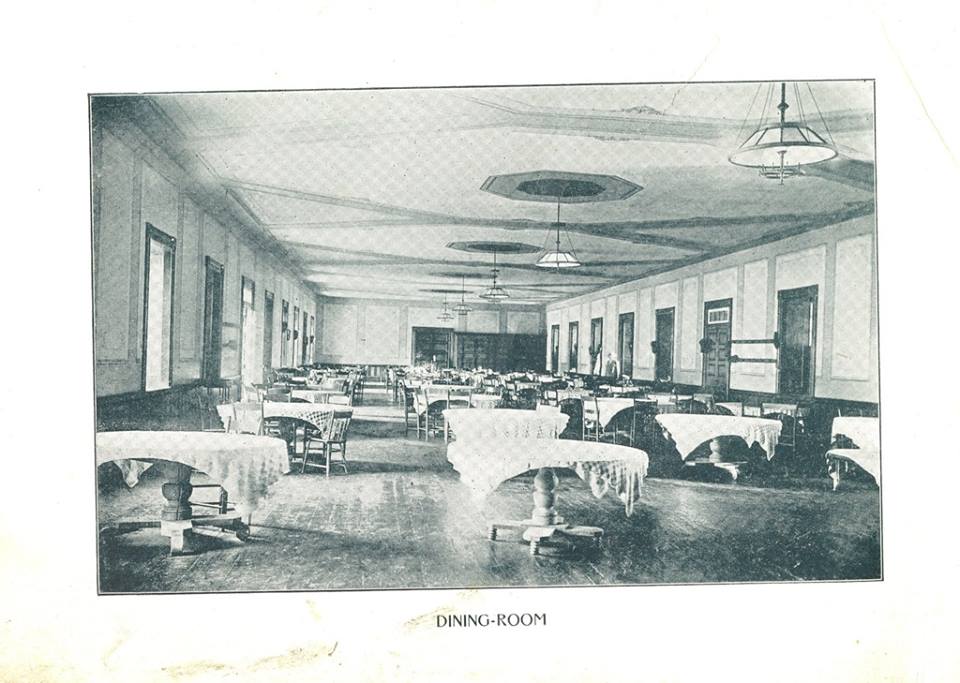 |
| The dining room during resort days. |
 |
| The dining room now. |

 |
| Inside the chapel. |


The fairly modern kitchen for the old folks home was in a wing that was added, I'm guessing in the 1970s, maybe. Nevertheless, it's ghostly, and easy to imagine the sound of voices, running water, and the clatter of pots and pans.


 |
| Pantry |
 |
| A beautiful door to walk-in refrigeration, one of three or four. |
Along with the kitchen addition, a dormitory was built to house the elderly residents. Wandering these halls made my heart hurt as I thought of the days when they were filled with people, both those who needed care and those who gave it.


In the basement of the original building were remnants of the glory days.


 |
| This arched opening still had faded green construction paper shamrocks pinned to the temporary covering. I'm guessing that at one time long ago, it must have been a place to get drinks and snacks. |
As we wandered around, looking at all the peeling paint, water damage, broken windows, and dirt, Connie and I kept wondering aloud, "Where would you even begin to fix up this place?" It's so big, and literally every inch needs to be redone. It would take much more than a small fortune to even make a dent. From the outside, the Old Sweet still stands tall and stately, but on the inside, she's a lot more than worn around the edges. She's worn out.
Besides the main building, there were originally five brick cottages - more like houses - built in a row not far away. Only three remain now, and the middle one has been remodeled. What a breath of fresh air it was to see a tiny bit of the decaying resort saved from an ugly death! This remodeled middle cottage currently houses the office of Ashby Berkley, the man who has taken on the monumental task of restoring the Old Sweet. To read about his vision in detail, check out this excellent article in WV Living magazine: Springs Eternal.
 |
| The three remaining cottages; the one nearest the person has been remodeled. |


The last thing we explored was the pool and bath house. It wasn't so very long ago that these were usable. Many of my friends and schoolmates who grew up in the area swam there as children and teens. Originally, the sweet spring pool and bath house looked like this:

And now it looks like this:

The corner towers have crumbled since I worked there in the early 1980s. I don't know when the pool was last used, but from the look of things, it's been decades.


The pool is basically square, and the surrounding bath house is (was) as well. These photos were taken of all four sides, from various angles inside the enclosure.
 |


Although the water is green with islands of algae in the corners, the spring is still running constantly through the pool, as evidenced by this drain and the sound of rushing water.


Inside the bath house there are two dressing rooms (one for women and one for men) and more of the same ruin and decay.


As our tour of Old Sweet Springs came to an end, we were sad indeed to see it so neglected. The gloomy weather didn't help lift our spirits, but the prospect of restoration via the vision and effort of Ashby Berkley and a bevy of other dedicated folks is encouraging. I'm eager to see what they can accomplish!
Watch for the next stop on our tour: the Beirne Dransfield store...


